

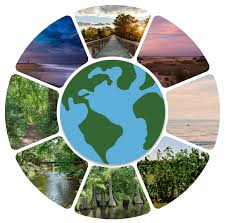
On April 22nd of every year, Earth Day is celebrated to remind people of how necessary it is to maintain a healthy environment and promote future programs to keep our Earth clean for generations to come. Earth Day was officially recognized as a national observance in 1970 after an oil spill occurred in Santa Barbara in 1969. That spill made over 20 million Americans demonstrate against pollution, soon leading to the creation of the United States Environmental Protection Agency and laws like the Clean Air Act, which limit the release of carbon emissions to secure public health.
This year’s theme for Earth Day is “Our Power, Our Planet,” focusing on what people can do to make the world a better place. The theme is centered around three core ideas to support our planet. The first pillar asserts that local communities, like cities, should have their own green initiatives, maintained independent of national policies. The second states that helping Earth also benefits the economy. Wind and solar energy are cheaper than gas and other fossil fuels; they also create new jobs and lower healthcare costs. The third pillar highlights the importance of people taking action. Evidence indicates that once 25% of people adopt a new idea, the rest typically follow — so if more people find sustainable ways of living, others will find a way, too.
Helen Keller once said, “Alone we can do so little; together we can do so much,” which I think is the overall message of these three pillars and the theme of “Our Power, Our Planet.” It only takes one person to make a change and then their community will follow suit. New York State is in its second year of participating in the $1 Billion Sustainable Future Program, where they tackle the main sources of pollution: buildings, heat sources, transportation and the power grid. Their ultimate goal is to have 70% clean energy and 40% less pollution by 2030.
So how can you take action as an individual? The steps you can take this Earth Day are simple. Sort your trash into the right categories when throwing them away. Wash your laundry in cold water to decrease the shedding of microfibers from your clothes and save energy. Eat less meat to reduce your overall carbon footprint, and compost your leftover food to decrease waste in landfills and methane gas. Don’t stop after Earth Day; following those small routines daily can make our world a better place for years to come.