
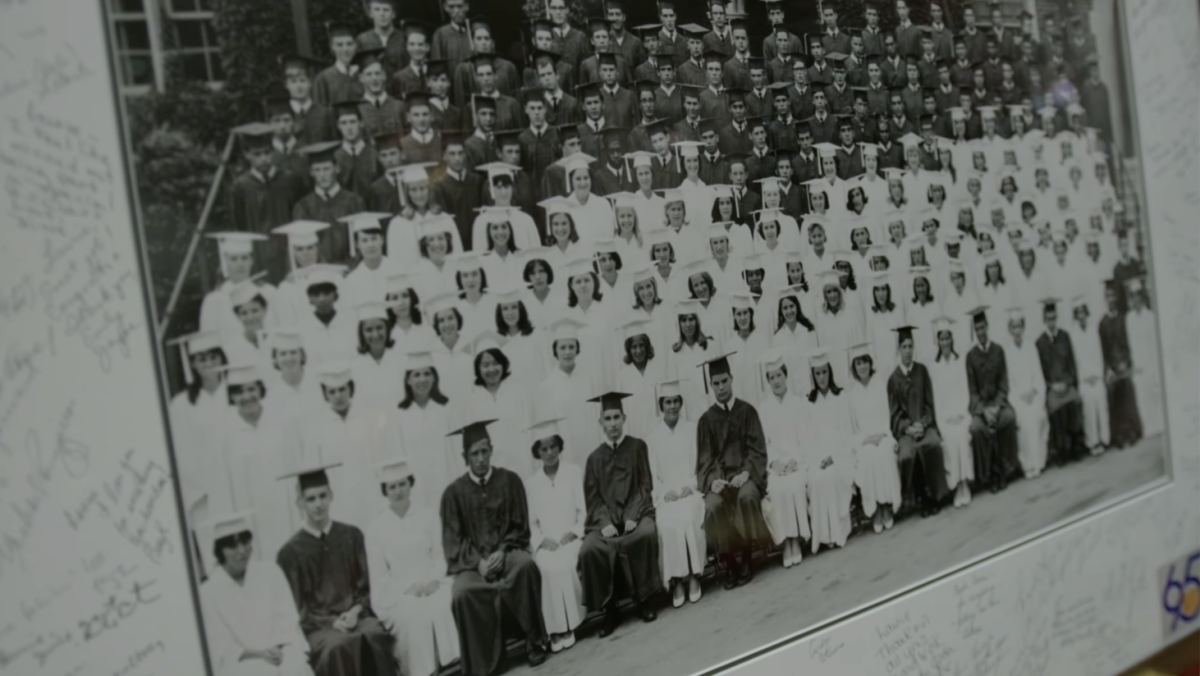
On Thursday, December 11, Manhasset students had the unique opportunity to go back in time as members of the Manhasset High School Class of 1965 returned to campus for a special panel discussion and recital. The event, held as part of a Social Studies Honor Society initiative, was also the alumni’s 60th high school reunion and offered students a rare opportunity to hear firsthand about life at Manhasset six decades ago.
The afternoon commenced with a panel discussion where alumni shared vivid memories of walking the same halls they did as teenagers, reflecting on how it felt to return to a place where many of their best experiences occurred. Panelists spoke about student life in the 1960s, underscoring the similarities and differences between their time and contemporary school life today.
A key focus of discussion was student engagement with American politics and major political events. The alumni explained that, for much of their high school years, political awareness among the student body was limited. News was often consumed through brief daily newspapers at home, and political discussion at school was uncommon. That changed significantly in November 1963 with the assassination of President John F. Kennedy. Several panelists vividly recalled hearing the shocking news of the president’s death announced over the school loudspeaker, and by word of mouth, a moment they described as a turning point in their lives, which increased their generation’s political engagement. School was closed, the nation came to a standstill, and students became more aware of civil rights, war, and national leadership.
The Vietnam War was another defining issue discussed. Although many alumni were not yet eligible for the draft during high school, the reality of the war influenced their decisions post-graduation, with some pursuing careers such as medicine in hopes of avoiding combat. The alumni highlighted how uncertain and emotional that time period felt for people preparing to enter adulthood.
Conversations about segregation and civil rights revealed both progress and lasting prejudice during that era. Alumni described Manhasset as experiencing de facto segregation, with segregated elementary schools but a more integrated high school. While students of color were able to receive a strong education, the alumni acknowledged racism, antisemitism, and discriminatory practices in housing, schools, and country clubs. Sandra Terry Mayo, the only Black panelist, shared her personal experiences in facing these realities, providing students with a strong perspective on the era’s social obstacles.
Student life and school culture were also major topics. The class recalled Manhasset’s strict dress codes, with boys having been required to wear collared shirts and socks, and clothing like jeans and sneakers prohibited. Girls had to wear skirts knee down in length, while t-shirts of any kind and jeans were not allowed. Dress code violations could result in being sent home for the day. Parents, they noted, were less involved than they are today, largely due to the absence of cell phones and easy communication. Students were expected to manage their own schedules, with parents generally unaware of where their kids were between dismissal and dinner.
Sports played a central role in fostering overall school spirit and community connectedness. Before Title IX, athletic opportunities for women were restricted, yet sports still united the student body through Friday night basketball games, Saturday football games, and sports nights. Several alumni credited their coaches with shaping their work ethic, resilience, and even their future careers, explaining how personal feedback and mentorship helped shape their future lives.
The panel concluded with advice to current students about navigating high school, handling bullying, and defining success. The class encouraged students to cherish their memories, value their relationships, and take time to record the stories and little moments of older family members while they are still there.
David Frainer delivered these closing remarks, highlighting the importance of living life with purpose and integrity. Following the panel discussion, alumnus Bert Spencer, an accomplished pianist, performed several classical pieces to conclude the event.
Overall, the Class of 1965 panel discussion was more than just a history lesson; it provided a meaningful connection between generations, reminding Manhasset’s current view that while society constantly changes, the human experiences of growth and community remain.