

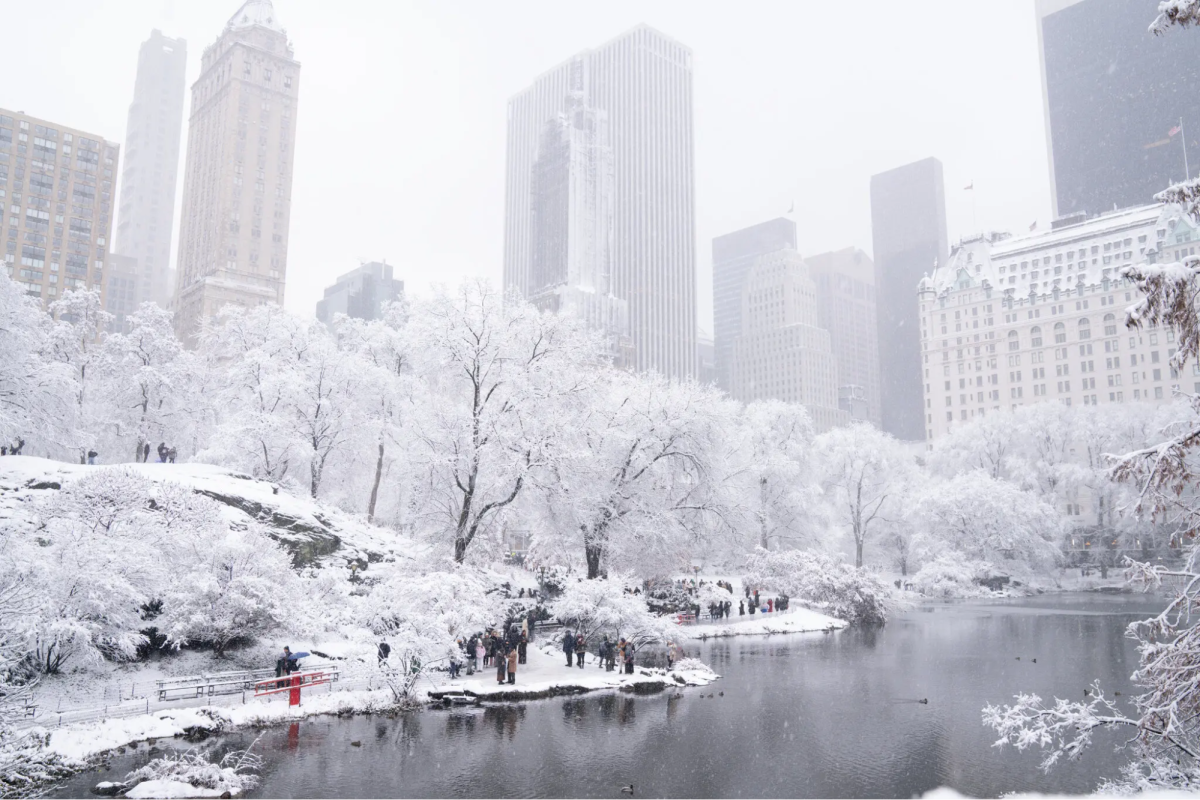
A week ago, a powerful snowstorm swept across nearly 40 states in the US, affecting millions of people. The storm, which spanned thousands of miles across the country, dropped significant snowfall across the Tri-State area and beyond. Meteorologists reported over a foot of snow in many places, with Manhasset reported around 11 inches, one of the largest snowstorms in the area since 2016. In some nearby towns, totals were even higher, with reports showing up to 30 inches of snow in parts of New York.
This heavy snowfall led to school closures, remote learning days in NYC, and freezing temperatures for the remainder of the week. Many students took advantage of the break, sledding and playing in the snow, while parents were tirelessly shoveling the inches of snow. Even after the snowfall ended, snow and ice lingered across Manhasset, making transportation difficult and sidewalks hazardous.
While heavy snowstorms may seem to contradict global warming, scientists say they are interlinked. In 2020, NYC was classified as having a humid subtropical climate, while most of the state experiences cold winters and hot summers. As the temperature rises, the atmosphere is able to lock in moisture, which can lead to stronger and wetter storms. At the same time, researchers report that winters are becoming shorter and warmer, with fewer consistently cold days. While major snowstorms can still occur, they are less predictable and often followed by longer periods of mild winter weather. Environmental scientists continue to study how climate change will affect future winter storms, but many agree that extreme weather events — including intense snowfall — may become prevalent.
Schools reopened when the storm passed and conditions improved, though patches of ice remained in sight. With winter not yet over, officials are encouraging students and families to stay informed and prepared for possible future storms. Students and teachers are back in the classrooms, while snow still lingers outside.